Author –
Date Published –
Can a building society outgrow its own postcode?
The first building society in Britain was formed in 1775 by a Birmingham publican called Richard Ketley, who got a group of local artisans together to pool their savings and build houses for each other, one member at a time, until everyone in the group had a home. The model spread fast, and by the mid-1800s, as industrial towns filled up with workers who banks had no interest in lending to, it had turned into something bigger and permanent. At its peak, Britain had somewhere in the region of 2,700 building societies, each one named after the town or trade that formed it, because that’s who it was for. It wasn’t a marketing decision, just a description of the group of people standing in the room.
Most of those 2,700 didn’t survive as independent names. Two world wars, the 1986 Building Societies Act that allowed conversion to bank status, and the 2008 financial crisis thinned the sector out. Around forty societies remain, each carrying a name given to it by, and for, a much smaller and more local group of people than the one it now serves. That’s the legacy every surviving building society is quietly sitting on, and the ones still around have landed on some very different answers to it.
Trim it, don’t replace it
Leeds Building Society used to be Leeds and Holbeck, and for most of the 20th century it lived in the shadow of a much bigger neighbour with a near-identical name. Leeds Permanent Building Society, “The Leeds”, was fifth-largest in the country by the late 1980s, with hundreds of branches and its own estate agency chain. Leeds and Holbeck was the smaller, regional one. Yet it’s Leeds Permanent that no longer exists, it merged with Halifax in 1995, became part of the plc formed the following year, and has since passed through HBOS into Lloyds, which is retiring the Halifax name itself in 2026.
Leeds and Holbeck, the smaller of the two, simply trimmed its name in 2005 and carried on. Holbeck was where the society’s original office stood, a specific corner of Leeds rather than the city itself, so the change wasn’t really a rebrand. It was a correction, so they kept the identity that meant something outside the immediate area, and lost the bit that only meant something inside it. Being the biggest name in the room at any given moment, it turns out, is no guarantee of still being there thirty years later.
Fold several names into one that was already regional
Yorkshire Building Society took a different route when it absorbed Chelsea Building Society and Norwich & Peterborough Building Society between 2010 and 2011. Both ran on for a few years as trading names before being retired into Yorkshire. The logic holds together because “Yorkshire” was never a single town to begin with, it’s a region, which gives the name room that “Chelsea” or “Peterborough” never had.
Keep the local name and mean it
Newcastle Building Society went the other way when it merged with Manchester Building Society in 2023. Its own identity is bound up with the North East, so expansion meant a different name, not a stretched version of the old one, so Manchester kept its own name, its own branch on King Street, and its own local team, backed by Newcastle’s balance sheet. At the time Newcastle’s chief executive was direct about it, this isn’t about Newcastle heading west, it’s about Manchester people banking with a Manchester name.
Or just keep growing under the small name you’ve got
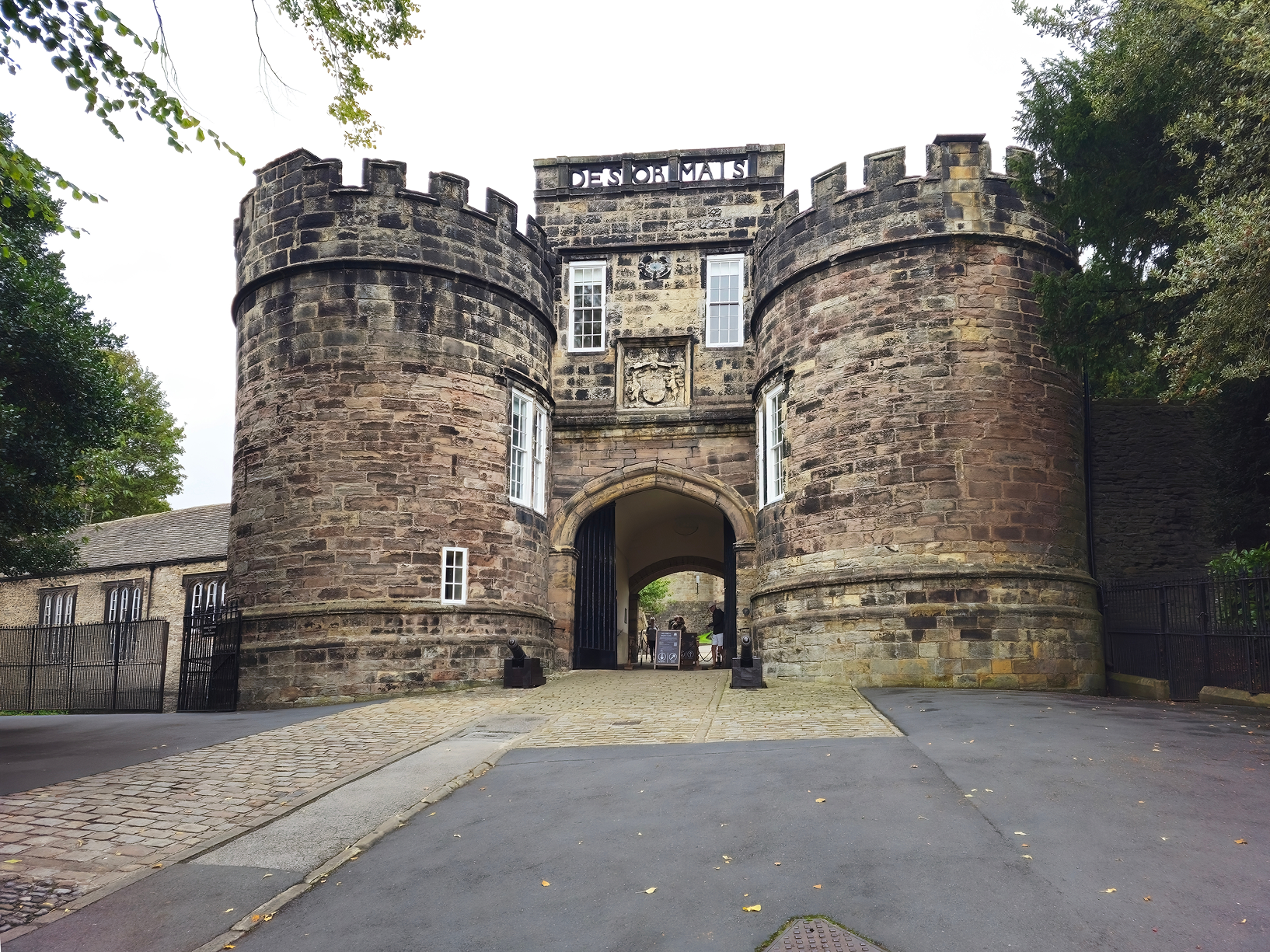
Then there’s Skipton, a market town of around 15,000 people best known for its castle and its Saturday market. Skipton Building Society, headquartered there, is the UK’s fourth-largest, with close to £39 billion in assets and over 1.3 million members, most of whom have never set foot in the town. Nobody there seems to have lost sleep over the mismatch, and customer research bears that out, asked whether they’d heard of Skipton, most members outside Yorkshire hadn’t, and it didn’t seem to bother them. Plenty didn’t even know whether Skipton was a real town. What they responded to was the castle in the logo, which read as solid and dependable regardless of what it was a castle of.
Four institutions, the same inherited problem, four different answers
Leeds trimmed its name. Yorkshire absorbed others into a name broad enough to take them. Newcastle multiplied local identities rather than flattening them. Skipton did nothing to the name at all and grew anyway. Each was solving, or in Skipton’s case simply not solving, a version of the same problem their 19th-century founders never had to think about, what a name is for once the community it described has become one of many.
Skipton shows a name doesn’t have to change for a society to grow well beyond it. But the name isn’t doing that work on its own. It travels outside its heartland when there’s a clear purpose behind it and something genuinely different on offer, enough that “never heard of the place” becomes a bit of texture rather than a barrier. Without that, it’s just a small name.